
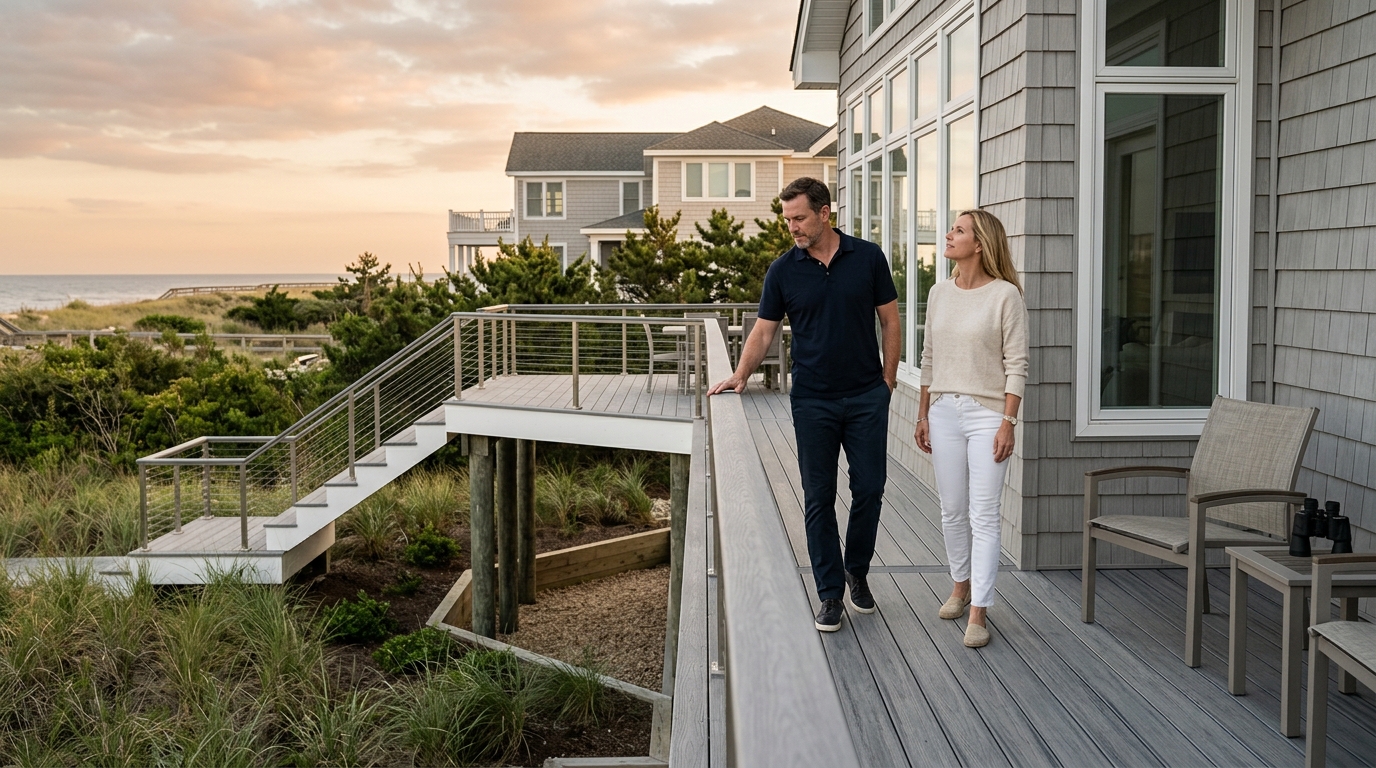
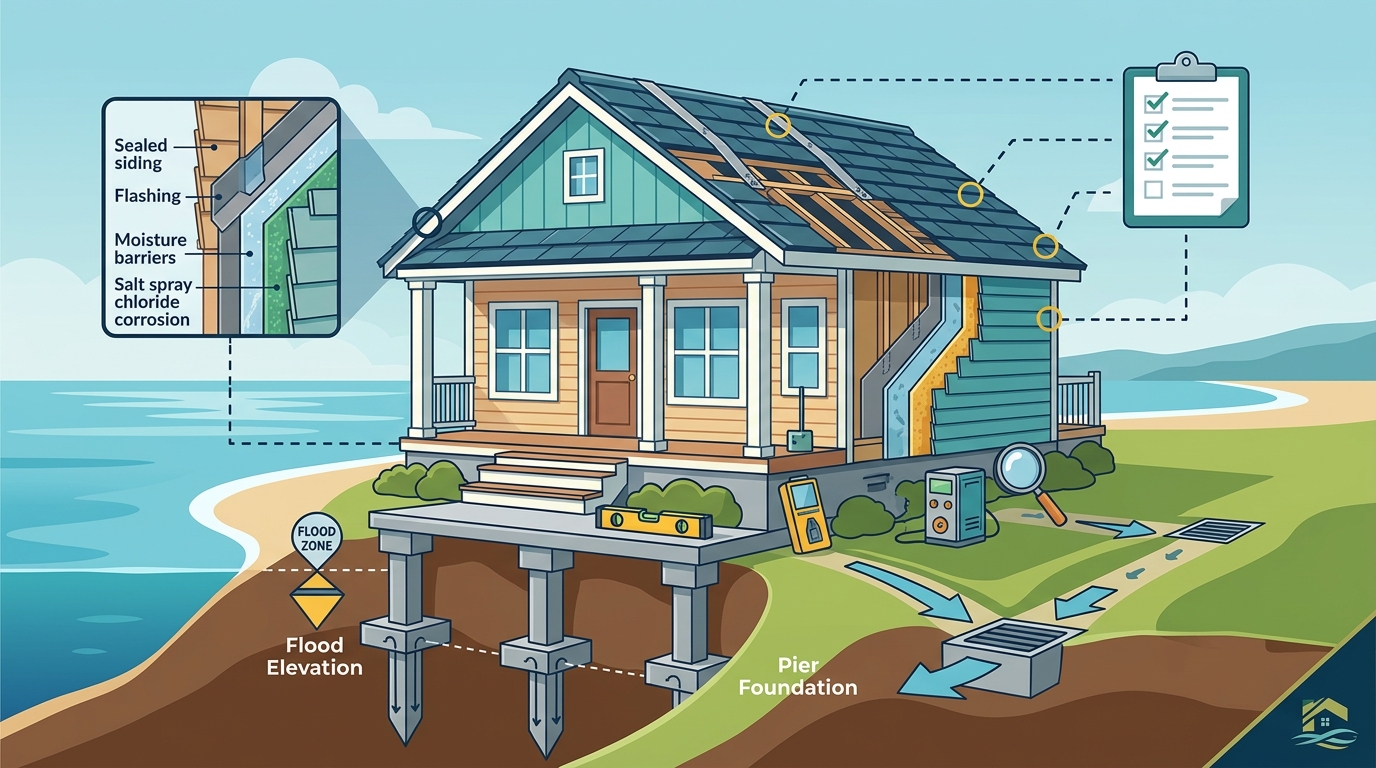
Assessing a Delaware beach house for salt air and storm resistance requires inspecting structural elevation, material integrity, and drainage systems. Buyers must verify that the foundation meets local flood zone requirements and that exterior finishes are sealed against chloride corrosion. Crowley Real Estate Associates provides local expertise to help buyers identify these critical durability factors before purchase.
Structural Elevation and Flood Zone Compliance
Coastal structural durability is the ability of a building to withstand environmental stressors without significant damage. In Delaware, the most critical factor is the elevation of the lowest floor relative to the Base Flood Elevation (BFE). Properties located in designated flood zones must adhere to strict elevation standards to minimize storm surge impact. Buyers should request the original Certificate of Occupancy and any subsequent elevation certificates to confirm compliance. If a home was built before current codes were enacted, it may lack the necessary vertical clearance, increasing the risk of water intrusion during severe weather events. For additional details, review the Owner Login Vacation Rental.
Implication: A home that sits below the current BFE may face higher insurance premiums or difficulty securing financing. Verifying elevation data early prevents costly retrofits or unexpected insurance denials.
Material Integrity and Salt Air Corrosion
Salt air corrosion is the chemical degradation of building materials caused by exposure to marine atmospheric conditions. This process accelerates the rusting of steel fasteners, rebar, and structural supports. During a physical inspection, look for bubbling paint, flaking surfaces, or visible rust on exterior trim and window frames. Concrete foundations in coastal areas are particularly susceptible to chloride penetration, which can weaken the structural matrix over time. A professional inspector should use a moisture meter to detect hidden dampness that indicates failed sealing or drainage issues.
Implication: Homes with unsealed concrete or corroded steel components require significant maintenance budgets. Identifying these issues during the inspection phase allows buyers to negotiate repairs or adjust their offer accordingly.
Drainage Systems and Water Management
Effective drainage is the mechanism by which a property directs rainwater and storm runoff away from the foundation. In Delaware, heavy rainfall and storm surges can overwhelm inadequate drainage systems, leading to basement flooding and foundation erosion. Buyers should inspect the condition of gutters, downspouts, and grading around the property. The ground should slope away from the house to ensure water flows toward the street or a designated drainage area. Clogged or broken drainage pipes can cause water to pool near the foundation, accelerating soil saturation and structural settling.
Implication: Poor drainage is a leading cause of foundation cracks in coastal homes. Ensuring a functional water management system is essential for long-term structural stability.
Wind Resistance and Roofing Systems
Wind resistance is the capacity of a building envelope to withstand high-velocity winds without structural failure. Delaware is prone to tropical storms and nor'easters that generate sustained winds capable of lifting roofing materials. The integrity of the roof deck, shingles, and flashing is critical. Buyers should examine the roof for missing shingles, lifted edges, or signs of previous storm damage. Additionally, the attachment of the roof to the wall structure, known as the roof-to-wall connection, must be secure. Modern building codes require specific hurricane clips or strapping to prevent roof detachment during high winds.
Implication: A roof that has not been updated to current wind resistance standards poses a significant risk. Replacing an aging roof before purchase can save thousands in emergency repairs and insurance deductibles.
Professional Inspection and Local Expertise
Local market knowledge is the understanding of specific environmental risks and historical performance data for a given area. General inspectors may lack the specific experience needed to identify subtle signs of coastal wear. Working with a local real estate professional who understands the nuances of Delaware beach properties can provide valuable insights. These professionals can identify neighborhoods with a history of storm damage or specific soil conditions that affect foundation stability. They can also connect buyers with specialized contractors who focus on coastal restoration and maintenance.
Implication: Leveraging local expertise helps buyers avoid properties with hidden structural issues. It ensures that the due diligence process is thorough and informed by regional experience.
Key Takeaways
- Verify that the home's elevation meets or exceeds the local Base Flood Elevation (BFE) standards.
- Inspect exterior materials for signs of salt air corrosion, such as rust and flaking paint.
- Ensure the property has a functional drainage system that directs water away from the foundation.
- Consult with local real estate professionals who understand specific coastal risks in Delaware.
- Review historical insurance claims to identify patterns of storm-related damage.
Frequently Asked Questions
What is the most important structural feature for a Delaware beach house?
The elevation of the lowest floor relative to the Base Flood Elevation is the most critical feature. It determines the home's resistance to storm surge and flood damage.
How does salt air affect concrete foundations?
Salt air causes chloride penetration into concrete, which corrodes the internal steel rebar. This leads to cracking and structural weakening over time.
Should I hire a specialized inspector for a coastal home?
Yes, a specialized inspector with coastal experience can identify subtle signs of salt damage and drainage issues that general inspectors might miss.
What should I look for in the roof during an inspection?
How can I check if a home has had previous storm damage?
Request the seller's disclosure statements and review historical insurance claims. These documents often reveal past repairs and damage events.
Is it worth buying a home that needs storm upgrades?
It depends on the cost of upgrades versus the purchase price. Negotiating a lower price to cover necessary storm resistance improvements can be a sound investment.